Fishing Old Hickory Lake and the dam tailwater, and where to eat after
Sixteen miles from downtown, Old Hickory is what TWRA calls a world-class striper lake, with regular fish over 50 pounds, sauger stacked below the dam all winter, and free piers on the Hendersonville shore. A guest guide from Smells Like Fish, ending at the three Hendersonville tables on the road home.
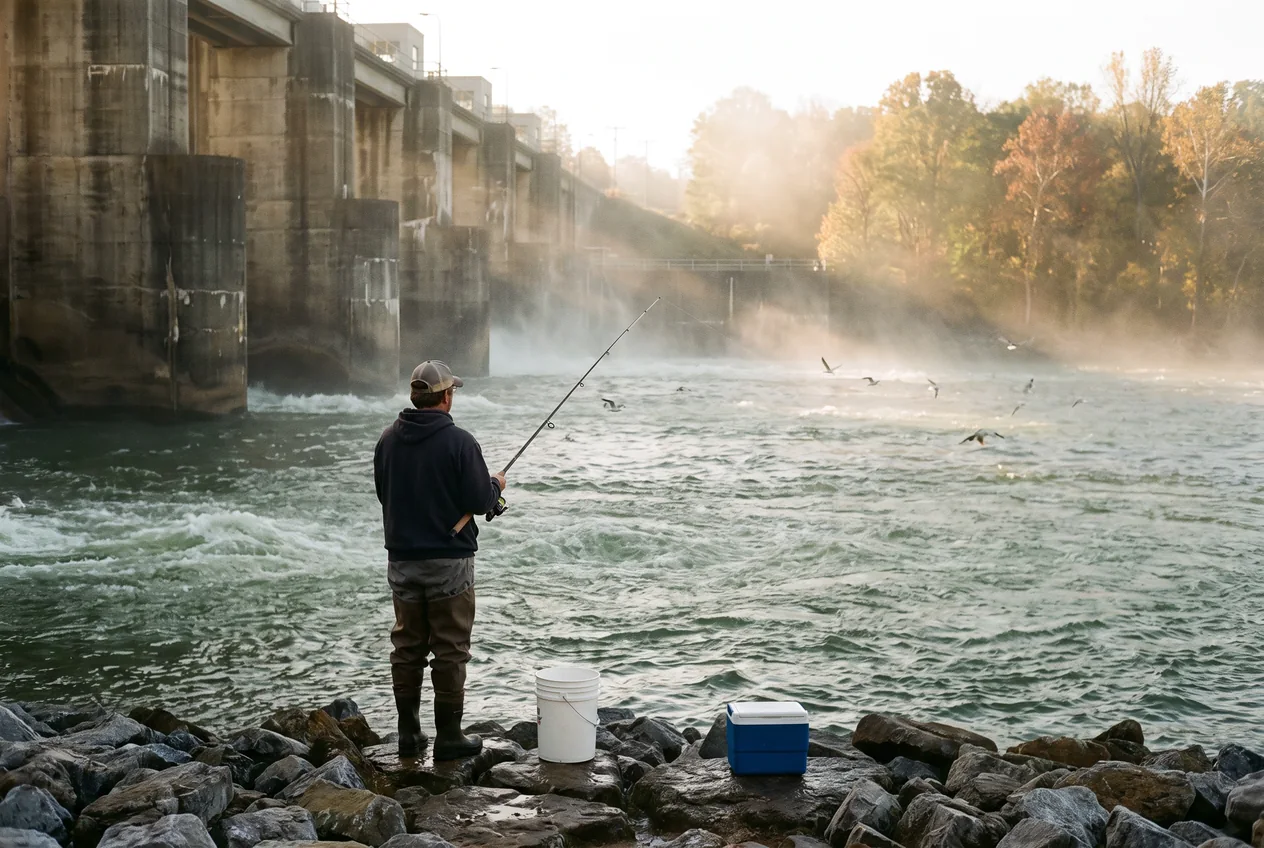
Sixteen miles from downtown, the Cumberland comes through Old Hickory Dam into a tailwater that the Tennessee Wildlife Resources Agency describes without hedging: Old Hickory “provides a world class trophy striped bass fishery with regular catches exceeding 50 pounds,” and the state record, 65 pounds 6 ounces, came out of it. Above the dam is a 22,500-acre lake with 44 free ramps and eight fishing piers; below it, from January through March, the sauger stack in the eddies between the generator wall and the spill gates. This is the fishing half of a day out here. The eating half is at the end, in Hendersonville, on the road home.
I write the guides on Smells Like Fish, a bait and tackle site, and I am a guest here. Top of Nashville asked for the water. They supplied the tables.
The day, in order
Leave downtown in the dark and take Gallatin Pike north. Be on the tailwater below the dam at first light with cut skipjack or shad on the bottom for the catfish and, in winter, a heavy jig for the sauger, bounced off the bottom in the eddies the way TWRA describes it. When the sun gets high, walk or drive the few hundred yards up to Rockland Recreation Area, the Corps park beside the dam with a fishing pier, bank access, and shelters, or go five miles on to Sanders Ferry Park for the other Hendersonville pier. Lunch is in Hendersonville, ten minutes from the dam. In the afternoon the lake’s crappie hold on the sloping banks with stumps and rocks, and in April the largemouth are shallow in the creek arms. Dinner is back in Hendersonville before the drive home.
What is in the water
Striped bass are the headline and TWRA is careful to say the fishery “is totally dependent on annual stockings.” Peak is May at the top of the lake near Carthage and Cordell Hull Dam, but the tailwater boils below Old Hickory Dam hold fish through the year, on live skipjack and shad. Two stripers or hybrids a day at 15 inches. Sauger are the winter fish: TWRA’s advice is to fish “the eddy areas between the generator wall and spill gates” with “a heavy jig (¼-1 ½ ounce)…bounced off the bottom” from January through March. Ten a day at 15 inches. Catfish are the year-round fish: channel cats predominate on the river through Nashville with “large Flathead and Blue Catfish” as the trophy component, and TWRA names the bank below Old Hickory Dam as access. No creel limit on fish 34 inches and under.
Largemouth account for 40 percent of the fishing effort on Old Hickory, per TWRA, best in April in Little Cedar Creek and Spring Creek, 14-inch minimum. Crappie are 10 percent of the effort, late March through April on “gently sloping banks preferably with submerged structures such as stumps, treetops and even rocks,” 30 a day at 10 inches.
The trout you did not expect: 11 miles east of downtown, TWRA stocks rainbow trout into the Stones River below J. Percy Priest Dam from December through March, seven fish, no length limit, bank fishing, free. And an hour east, the Caney Fork below Center Hill Dam holds rainbows, browns, and brook trout all year on cold dam water, with special rules and a generation schedule you check before you wade. Both need the trout stamp or an all-species licence.
Where to fish from shore
- Old Hickory Dam tailwater, 16 miles: Corps launching ramp and fishing platform below the lock, stripers in the boils, sauger in the eddies in winter, catfish all year. Rocks make the boating dangerous; the bank is the play.
- Rockland Recreation Area, Hendersonville, 16 miles: fishing pier, bank fishing, shelters, beside the dam.
- Sanders Ferry Park, Hendersonville, 21 miles: city park with a fishing pier and a ramp.
- Bledsoe Creek State Park, Gallatin, 36 miles: free state park on the lake with a pier, a ramp, and camping.
- J. Percy Priest Dam tailwater, 11 miles: rainbow trout December to March and white bass in spring on the Stones River, bank fishing below the dam, free.
- Shelby Park, 4 miles: the city’s public ramp on the Cumberland, bank fishing for catfish at the ramp.
Licences, fees, and the trout stamp
Anyone 13 or older needs a Tennessee licence, sold online at Go Outdoors Tennessee and at TWRA agents. A resident one-day licence is $6 without trout and $11 with all species; nonresidents pay $20 for three days without trout and $40 with, or $49 and $98 for a year. Children 12 and under fish free, 13 to 15 need the $9 junior licence, and 65 and older pay $4 a year. The catch is the trout stamp: a no-trout licence does not cover the Stones River or the Caney Fork, so add the $21 Annual Trout Supplemental or buy the all-species version. Tennessee charges no entrance fee at any state park, and TWRA counts 44 free public ramps on Old Hickory alone, so the licence is the only money the day costs on the water.
The gear side
Which sinker holds cut skipjack in tailwater current, how to cast-net shad for the stripers, which jig weight for the sauger eddies, and what the Caney Fork generation schedule means for a wader: that is my beat, and it does not belong on a restaurant site. The full Nashville fishing guide on Smells Like Fish has the map of all 11 spots with drive times from downtown, the live Caney Fork and Cumberland flows, every fee, the licence and stamp links, the ramp table, the TWRA limits lake by lake, and the tackle list.
Where to eat after
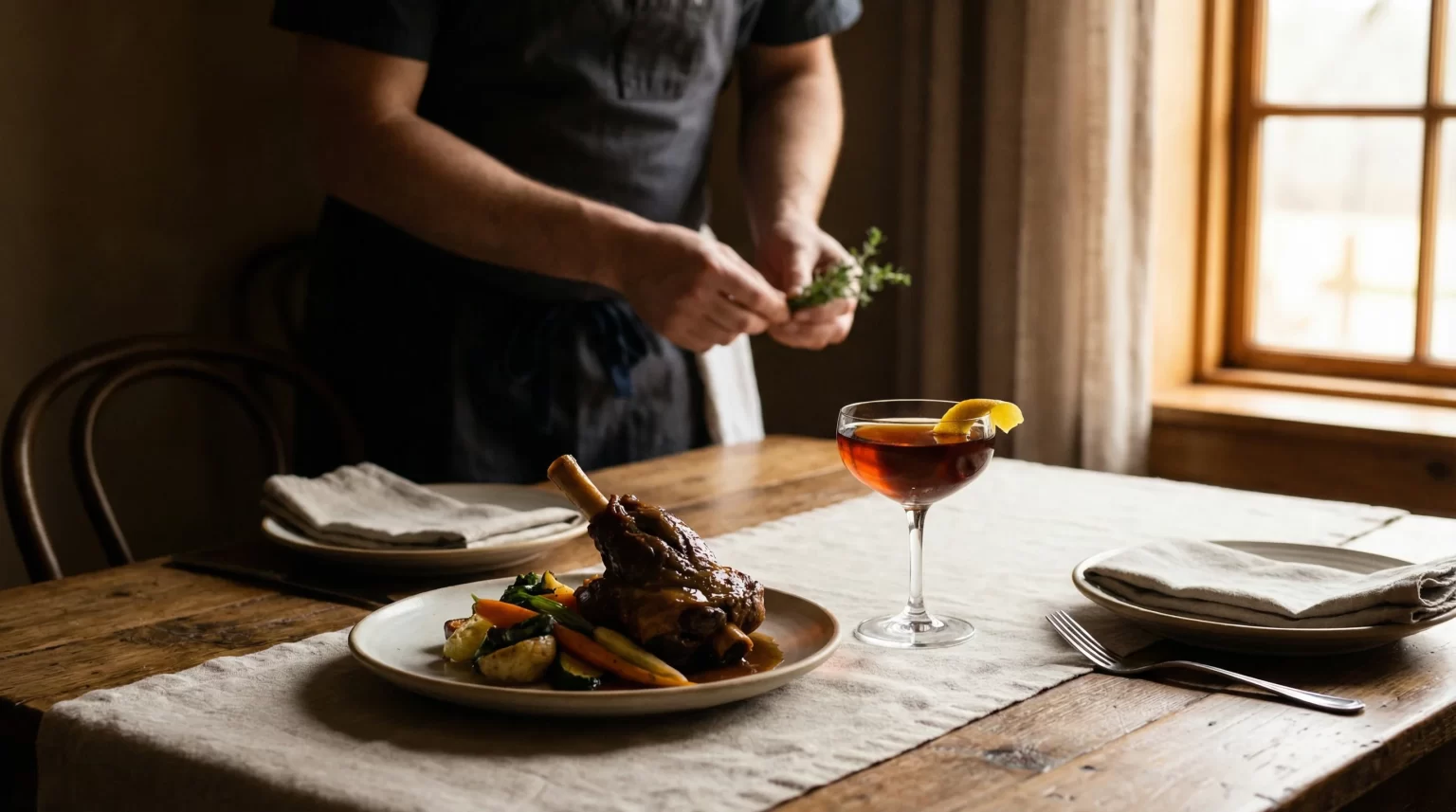
Rockland and Sanders Ferry are both inside Hendersonville, so the road home runs through it. These three are on the Top of Nashville Hendersonville list. The scores are theirs, not mine.
Sources. Tennessee Wildlife Resources Agency, Old Hickory, Cheatham, and J. Percy Priest reservoir pages, trout regulations and stocking information, and fishing licence prices; U.S. Army Corps of Engineers Nashville District on the Old Hickory tailwater ramp and platform; Tennessee State Parks on entrance fees. Drive distances computed on OpenStreetMap roads from downtown Nashville.
Ray Dodson writes for Smells Like Fish. Ray is the pen name of that site's research desk: every recommendation is built from documented angler consensus, state fish and wildlife guidance, and published testing, with sources named in every article. This piece was written for Top of Nashville.